A Muslim dairy farmer was stopped late one night last July as he led two cows down a track in rural Rajasthan, south of the Indian capital, Delhi. Within hours he was dead, but who killed him, asks the BBC's James Clayton - the "cow vigilantes" he met on the road, or the police?
เกษตรกรผู้เลี้ยงโคนมชาวมุสลิมคนหนึ่งหยุดทำงานเมื่อปลายเดือนกรกฎาคมที่ผ่านมาเนื่องจากเขานำวัวสองตัวไปตามทางในรัฐราชสถานในชนบททางตอนใต้ของเมืองหลวงอินเดียชื่อนิวเดลี ภายในไม่กี่ชั่วโมงเขาก็ตาย แต่ใครกันแน่ที่ฆ่าเขา - คำถามนี้ถูกถามโดย เจมส์ เคลย์ตัน "มีการตั้งข้อสงสัยว่า เขาถูกฆ่าโดยกลุ่มพิทักษ์วัวที่มาเจอเขาบนถนน หรือว่าตำรวจกันแน่ที่ฆ่า?"
it's 4am and Dr. Hassan Khan, the duty doctor at Ramgarh hospital is notified of something unusual
เวลาตี 4 นายแพทย์ ฮาสซาน ข่าน หมอที่เข้าเวรอยู่ที่โรงพยาบาลแรมการฮ์ได้พบบางอย่างผิดสังเกต
The police have brought in a dead man, a man they claim not to know.
ตำรวจได้นำศพของชายผู้หนึ่งมา ซึ่งพวกเขาอ้างว่าไม่รู้จัก
"What were the police like when they brought him in? Were they calm? I ask him
"สีหน้าของตำรวจเป็นไงมั่งเมื่อพวกเขานำศพชายดังกล่าวเข้ามา พวกเขาทำหน้าเฉยๆหรือเปล่า "
ผมถามคุณหมอ
"Not calm", He says. "They were anxious."
"ไม่นะ" หมอตอบ "พวกเขาดูกระวนกระวายใจ"
"Are they usually anxious?" - I ask
"พวกตำรวจนี่ปกติกระวนกระวายใจแบบนี้เปล่า?" ผมถาม
"Not usually", He says, laughing nervously
"ไม่ปกติ", หมอบอกพร้อมหัวเราะแบบเจื่อนๆ
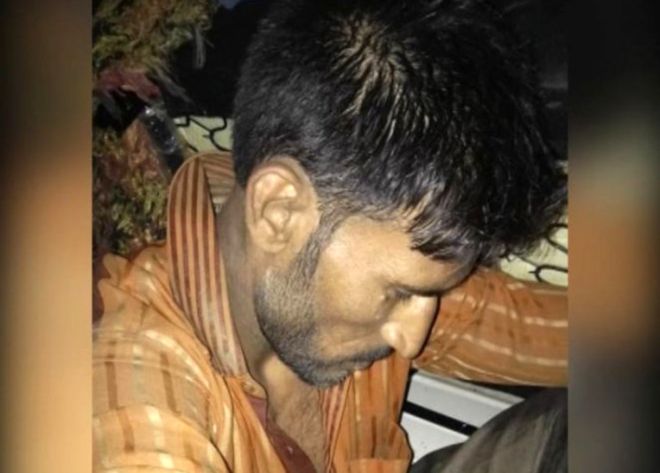
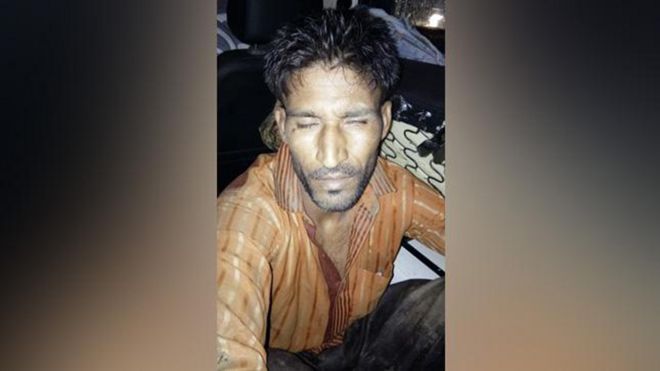
The dead man is later identified by his father as local farmer Rakbar Khan
หลังจากนั้นคนตายก็ถูกระบุว่าเป็นศพของเกษตรกรท้องถิ่นชื่อ รัคบาร์ ข่าน
This was not a random murder. The story illustrates some of the social tensions bubbling away under the surface in India, and particularly in the north of the country
นี่ไม่ใช่การฆาตรกรรมแบบสุ่ม เรื่องนี้แสดงให้เห็นถึงความตรึงเครียดทางสังคมที่เกิดขึ้นในประเทศอินเดีย โดยเฉพาะอย่างยิ่งในบริเวณภาคเหนือของประเทศ
And his case raises questions for the authorities - including the governing Hindu nationalist BJP party.
และคดีการตายของรัคบาร์ ข่านนี้ได้ถูกตั้งคำถามสำหรับเจ้าหน้าที่ รวมถึงรัฐบาลฮินดู พรรคภารตีชนตา (พรรคการเมืองในอินเดียที่สนับสนุนศาสนาฮินดู)
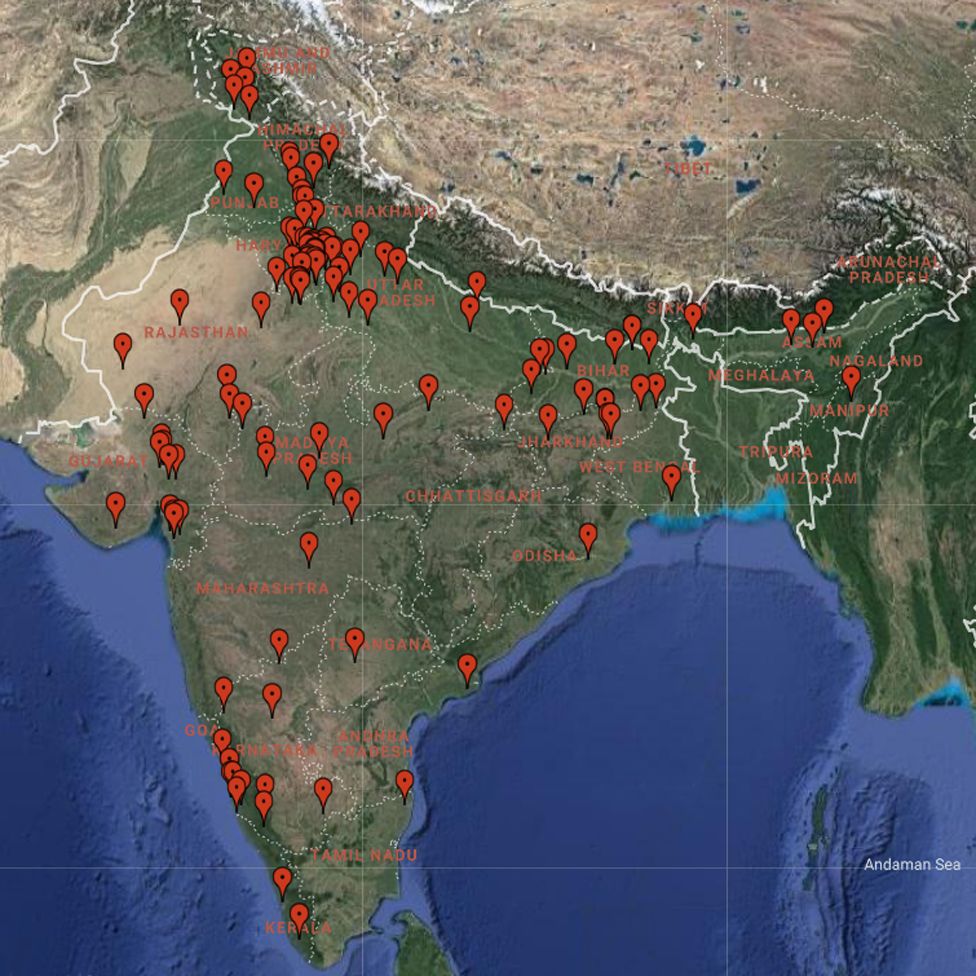
Cow - Related violence 2012 - 2019
ภาพตำแหน่งความรุนแรงที่มีวัวมาเกี่ยวข้องในปี ค.ศ.2012 - ค.ศ.2019
Rakbar khan was a family man. He had seven children
รัคบาร์ ข่าน เป็นคนรักครอบครัว และมีลูกๆทั้งหมดเจ็ดคน
He kept cows and he also happened to be a Muslim. That can be a dangerous mix in India.
เขาเลี้ยงวัวไว้ และเขาก็เป็นมุสลิมอีกด้วย ซึ่งนี่อาจจะเป็นอันตรายสำหรับมุสลิมที่อยู่ปะปนกับผู้อื่นในอินเดีย
"We have always reared cows and we are dependent on their milk for our livelihood," says Rakbar's father, Suleiman
"พวกเราก็เลี้ยงวัวอยู่เป็นประจำ และเราต้องพึ่งพานมวัวสำหรับการทำมาหากิน" สุไลมานพ่อของรัคบาร์(ผู้เสียชีวิต)กล่าว
"No-one used to say anything when you transported a cow"
ไม่มีใครพูดอะไรทั้งนั้นเมื่อมีการขนส่งวัว
That has changed. Several men have been killed in recent years while transporting cows in the mainly Muslim region of Mewat, not far from Delhi, where Rakbar lived.
ตั้งแต่มีการเปลี่ยนแปลง, มีชายหลายคนถูกฆ่าตายในช่วงไม่กี่ปีที่ผ่านมา ในขณะที่การขนส่งวัวในภูมิภาคส่วนใหญ่เป็นมุสลิม ในเมืองเมวัต ซึ่งอยู่ไม่ห่างจากเดลี ที่ที่รัคบาร์เคยอาศัยอยู่
"People are afraid. If we go to get a cow they will kill us. They surround our vehicle. So everyone is too scared to get these animals," says Suleiman.
"ผู้คนต่างหวาดกลัว ถ้าจำมีใครไปรับวัวพวกกลุ่มพิทักษ์วัวก็จะฆ่าเรา พวกเขาจะล้อมรถเราไว้ ดังนั้นทุกๆคนต่างก็กลัวที่จะไปรับสัตว์เหล่านี้มา" สุไลมานพ่อของรัคบาร์ผู้เสียชีวิตกล่าว
Everyone I speak to in the village where the Khans live is afraid of gau rakshaks - cow protection gangs
พวกเราบอกกับคนในหมู่บ้านว่า ที่ที่ครอบครัวของพวกเราอาศัยอยู่ต่างหวาดกลัวจากกลุ่ม เกา รัคชาคส์ - กลุ่มคณะพิทักษ์วัว
Nawal Kishore Sharma's cow protection group in 2015
นาวัล ไคชอร์ ชาร์มา หัวหน้ากลุ่มพิทักษ์วัวและพรรคพวกในปี ค.ศ.2015
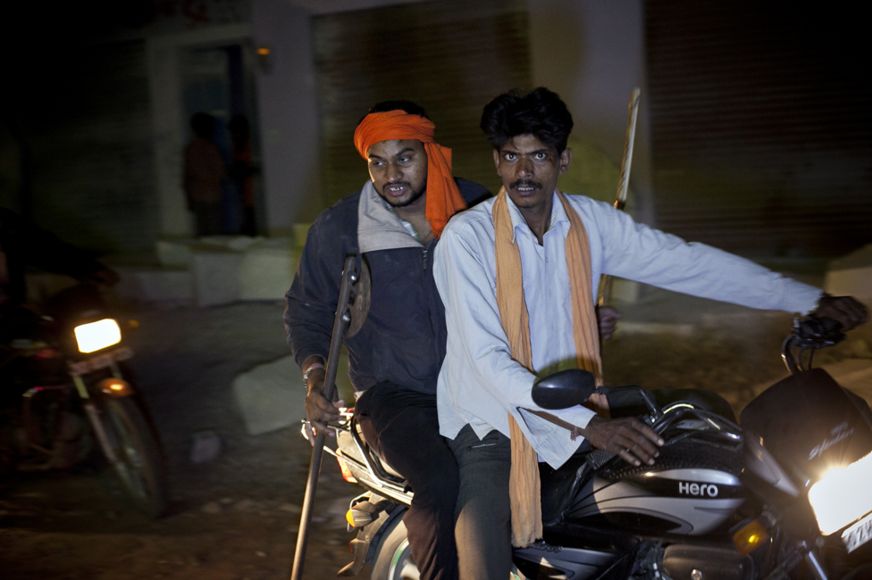
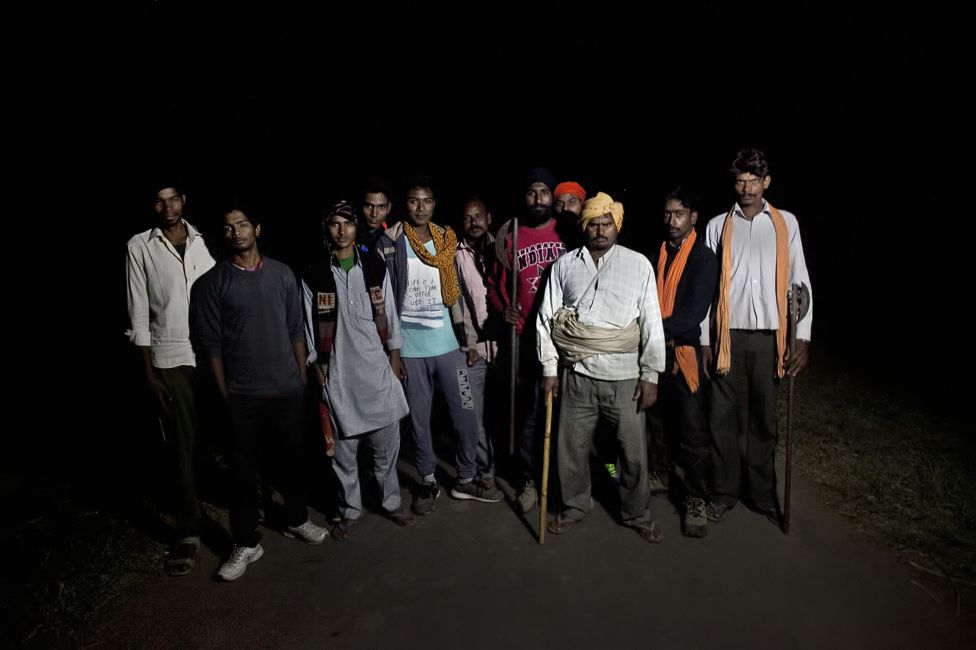
The gangs often consist of young, hardline Hindus, who believe passionately in defending India's holy animal.
แก๊งมักจะประกอบไปด้วยกลุ่มผู้นับถือศาสนฮินดูวัยหนุ่ม ผู้ที่เชื่อว่าจะต้องปกป้องสัตว์ศักดิ์สิทธิ์ของประเทศอินเดีย
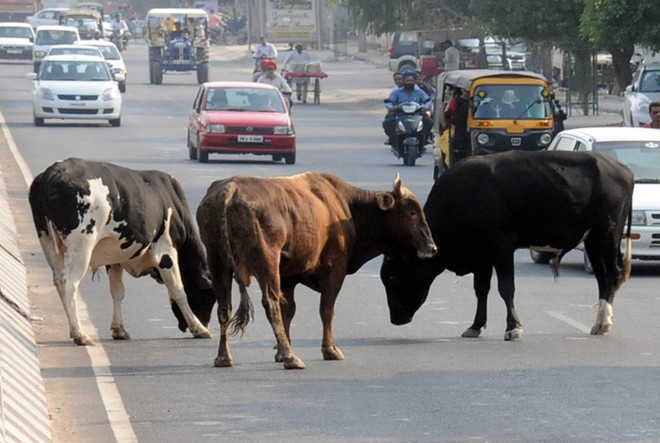
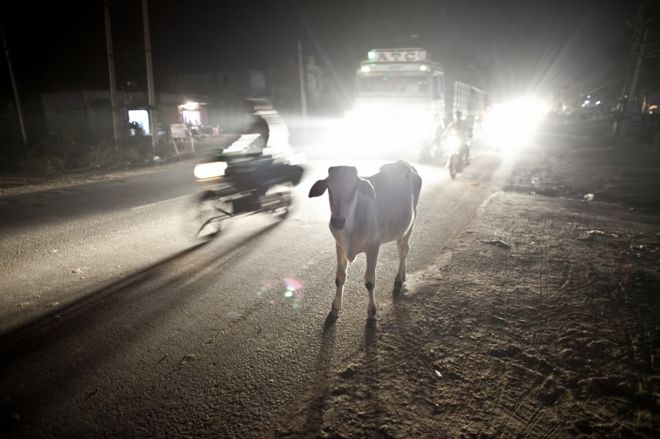
**ขออธิบายรายละเอียดนิดหนึ่งว่า ตามความเชื่อของศาสนาฮินดู วัวเป็นสัตว์ศักดิ์สิทธิ์ และเป็นตัวแทนของพระเจ้าซึ่งต้องบูชา และห้ามฆ่าหรือห้ามทำร้าย ดังนั้นเราจะเห็นภาพวัวบนท้องถนนบางแห่งในประเทศอินเดียที่คนส่วนใหญ่นับถือศาสนาฮินดู จะไม่ฆ่าวัว และมีวัวบนท้องถนนเต็มไปหมดดังภาพด้านล่างนี้ **
They believe that laws to protect cows, such as a ban on slaughtering the animals, are not being fully enforced - and they hunt for " cow smugglers", who they believe are taking cows to be killed for meat.
พวกคณะพิทักษ์วัวเชื่อว่ากฎหมายจะต้องคุ้มครองวัว เช่น กฎหมายการห้ามฆ่าสัตว์ยังไม่ได้ถูกบังคับใช้เต็มที่ ซึ่งพวกเขาไม่พอใจ และต้องออกตามล่า "ผู้ลักลอบขนวัว" ซึ่งพวกเขาเชื่อว่าวัวเหล่านี้จะถูกนำไปฆ่าเป็นอาหาร (ซึ่งพวกเขายอมไม่ได้)
Often armed, they have been responsible for dozens of attacks on farmers in India over the last five years, according to data analysis organisation IndiaSpend which monitors reports of hate crimes in the media.
บ่อยครั้งที่พวกนี้จะพกพาอาวุธไปด้วย พวกพิทักษ์วัวมีส่วนรับผิดชอบในการทำร้ายเกษตรกรหลายต่อหลายครั้งในอินเดียตลอด 5 ปีที่ผ่านมา โดยอ้างอิงจากสถิติขององค์กร IndiaSpend ซึ่งชี้ให้เห็นว่ามีการก่ออาชญากรรมที่โหดร้ายตามสื่อต่างๆ
On 21 July 2018, rakbar Khan met the local gau rakshak.
ในวันที่ 21 กรกฎาคม 2018 รัคบาร์ ข่านได้พบกับกลุ่ม เกา รัคชาค (กลุ่มพิทักษ์วัวเข้าอย่างจัง)
--------------------------------------------------------------------
There are some things we know for certain about what happened that night.
มีบางอย่างที่เรารู้แน่นอนเกี่ยวกับเหตุการณ์ที่เกิดขึ้นในคืนนั้น (คืนที่รัคบาร์ถูกฆ่า)
Rakbar was walking down a small road with two cows. It was late and it was raining heavily.
ในคืนนั้นขณะที่รัคบาร์กำลังเดินเท้าไปตามถนนเล็กๆพร้อมกับวัวอีกสองตัว ซึ่งเป็นเวลาดึกมากและฝนก็เทลงมาอย่างหนัก
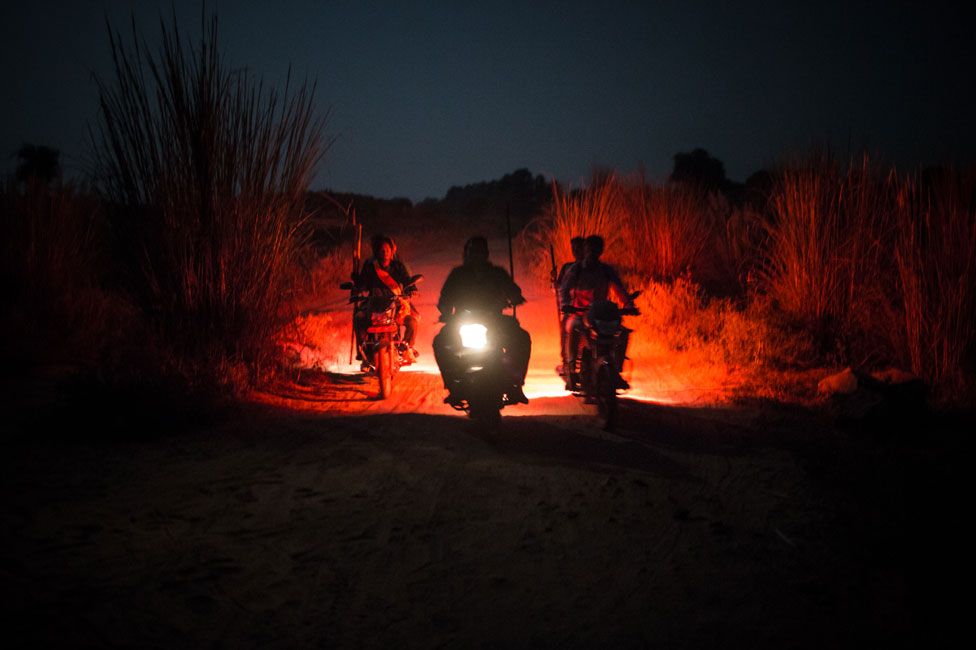
Then out of the dark, came the lights of motorbikes. We know this, because Rakbar was with a friend, who survived.
จากนั้นก็มีแสงไฟจากรถมอเตอร์ไซค์แล่นออกมาจากความมืด เรารู้ได้เพราะว่า รัคบาร์ไม่ได้ไปคนเดียว แต่มีเพื่อนไปด้วยและรอดชีวิต
At this point the details become a little sketchier. There are three versions of the story.
จากรายละเอียดตรงจุดนี้ เรื่องราวก็กลายเป็นเรื่องยิบย่อยเข้าไปใหญ่ เนื่องจากมีรายละเอียดเรื่องนี้ถึง 3 เรื่องที่แตกต่างกัน
The gang managed to catch Rakbar, but his friend, Aslam slipped away, He lay on the ground, in the mud and prayed he wouldn't be found.
พวกกลุ่มพิทักษ์วัวได้ตามล่ารัคบาร์ แต่เพื่อนของเขา อัสลามลื่นล้มลงไปในโคลน และเขาก็แอบสวดอ้อนวอน ซึ่งทำให้พวกพิทักษ์วัวมองไม่เห็นอัสลาม
"There was so much fear inside me, my heart was hurting," he says.
"ผมนี่กลัวไปจนถึงสุดขั้วหัวใจเลยทีเดียวเชียว หัวใจของผมแทบจะหยุดเต้น" อัสลามกล่าว
"From there I heard the screams. They were beating him. There wasn't a single part of his body that wasn't broken. He was beaten very badly."
"ผมได้ยินเสียงรัคบาร์ร้องโหยหวน พวกกลุ่มพิทักษ์วัวฟาดไปที่เขา รัวไม่ยั้ง และแทบไม่มีส่วนไหนในร่างกายของเขาเลยที่ไม่หัก เขาโดนทุบตีอย่างโหดร้ายมาก"
--------------------------------------------------------
Aslam says that Rakbar was killed then and there
อัสลามบอกว่ารัคบาร์ถูกฆ่าตายอย่างนั้นอย่างนี้
But there is evidence that suggests otherwise
แต่ว่าหลักฐานที่ได้กลับเป็นคนละเรื่องเลย
Much of what happened next focuses around the leader of the local cow vigilante group, Nawal Kishore Sharma.
เพื่อที่จะให้รู้เรื่องราวว่าอะไรเกิดขึ้นต่อจากนี้ เราได้ทำการเพ่งเล็งไปยังหัวหน้ากลุ่มพิทักษ์วัว นาวัล คิชอร์ ชาร์มา
Aslam claims he heard the gang address him by name that night, but when I speak to Sharma, he denies he was there at all.
อัสลามอ้างว่าเขาได้ยินกลุ่มพิทักษ์วัวเรียกชื่อเขาในคืนเกิดเหตุ แต่ว่าเมื่อผมพูดกับชาร์มา(หัวหน้ากลุ่มพิทักษ์วัว) เขาปฏิเสธว่าเขาไม่ได้อยู่ที่นั่น
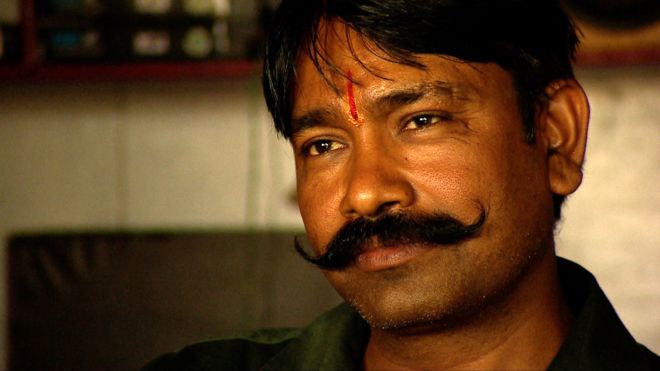
Nawal Kishore Sharma
นาวัล คิชอร์ ชาร์มา (หัวหน้ากลุ่มพิทักษ์วัว)
"It was about 00:30 in the morning and I was sleeping in my house... Some of my group phoned me to say they'd caught some cow smugglers" he says.
มันเป็นเวลาประมาณเที่ยงคืนครึ่งได้ ผมกำลังหลับอย่างสบายอยู่ในบ้านของผม จู่ๆก็มีเสียงโทรศัพท์ดังขึ้น คนที่โทรมาก็คือสมาชิกกลุ่ม ได้บอกกับผมว่า เขาเจอพวกลักลอบขนวัว" นาวัล คิชอร์ ชาร์มากล่าว
According to Nawal Kishore Sharma, he then drove with the police to the spot. "He was alive and he was fine," he says.
นาวัล คิชอร์ ชาร์มาอ้างว่า เขาขับรถไปกับตำรวจเพื่อไปยังจุดเกิดเหตุ ชายผู้ลักลอบขนวัวยังมีชีวิตอยู่แล้วก็สบายดีด้วย" นาวัล คิชอร์ ชาร์มา กล่าว
But that's not what the police say.
แต่นี่ไม่ใช่อย่างที่ตำรวจบอก
In their "first incident report" they say that Rakbar was indeed alive when they found him.
ใน "รายงานเหตุการณ์ครั้งแรก" ตำรวจได้บอกว่ารัคบาร์ยังมีชีวิตอยู่ เมื่อตำรวจเจอเขา
"Nawal Kishore Sharma informed the police at about 00:41 that some men were smuggling two cows on foot," the report says.
"นาวัล คิชอร์ ชาร์มา ได้แจ้งตำรวจเมื่อเวลาประมาณ 00:41 นาฬิกา ว่า มีชายบางคนกำลังลักบอลขนวัวสองตัวโดยการเดินเท้า" ระบุไว้ในรายงาน
Then the police met Nawal Kishore outside the police station and they all went to the location"
จากนั้นตำรวจก็ไปพบ นาวัล คิชอร์ ข้างนอกสถานีตำรวจ แล้วพวกเขาทั้งหมดก็เดินทางไปยังจุดเกิดเหตุ
There was a man who was injured and covered in mud.
มีชายคนหนึ่งบาดเจ็บแถมเนื้อตัวก็เต็มไปด้วยขี้โคลน
He told the police his name, his father's name, his age(28) and the village he was from.
เขาบอกกับตำรวจว่าเขาชื่ออะไร อายุเท่าไหร่ (28) และมาจากหมู่บ้านไหน
And as he finished these sentences, he almost immediately passed out, Then he was put in the police vehicle and they left for Ramgarh.
และทันทีที่เขาถูกแจ้งข้อกล่าวหาเรียบร้อยแล้ว เขาก็เป็นลมในทันทีทันใด และต่อจากนั้นเขาก็ถูกหามใส่รถตำรวจและก็รีบขับรถไปที่แรมการฮ์
"Then the police reached Ramgarh with Rakbar where the available doctor declared him dead"
และเมื่อตำรวจไปถึงแรมการฮ์พร้อมกับรัคบาร์ หมอที่เข้าเวรอยู่ก็บอกว่า เขาเสียชีวิตแล้ว
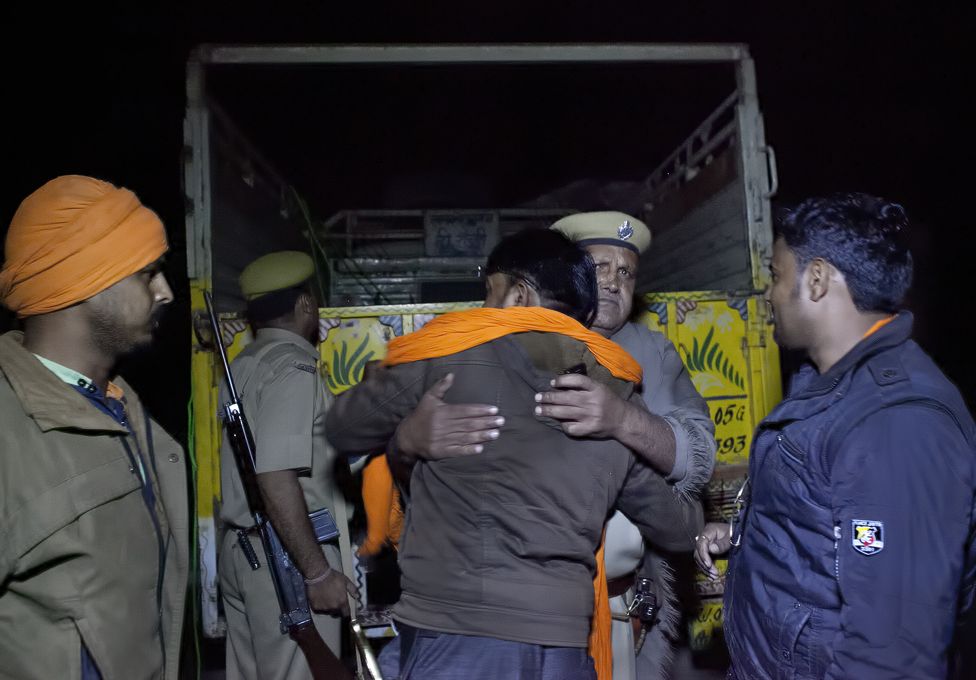
Ramgahr at night
แรมการฮ์ตอนกลางคืน
But this version of events is hightly dubious.
แต่ว่าเรื่องราวแบบนี้มีพิรุธที่น่าสงสัยมาก
I go to the hospital in Ramgarh, where Rakbar was taken. Hospital staff are busily going through bound books of hospital records - looking for Rakbar's admission entry.
ผมไปที่โรงพยาบาลในแรมการฮ์ ที่ที่รัคบาร์ถูกส่งไป พนักงานโรงพยาบาลก็รีบหาข้อมูลระเบียนประวัติคนไข้ และมองหาชื่อคนไข้ที่ชื่อรัคบาร์
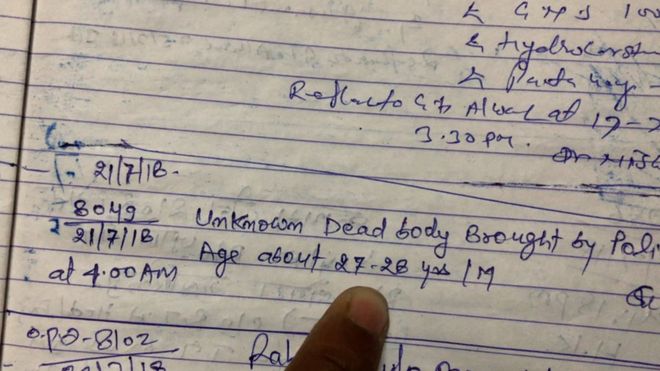
And then, there it is. "Unknown dead body" brought in at 04:00 on 21 July 2018.
ในเอกสารบอกว่า "ศพชายนิรนามไม่ทราบชื่อ" ถูกนำตัวมาเมื่อเวลา 04:00 นาฬิกา วันที่ 21 กรกฎาคม ค.ศ.2018
It's not a long entry, but it contradicts the police's story, and raises some serious questions.
ในระเบียนบันทึกก็ไม่มีอะไรมากแต่ว่ามันขัดแย้งกับที่ตำรวจบอก ซึ่งก่อให้เกิดคำถามซีเรียสต่างๆขึ้น
For a start, Rakbar was found about 12 minutes' drive away from the hospital. Why did it take more than three hours for them to take him there?
เอาประเด็นแรกเลยคือ รัคบาร์อยู่ห่างจากโรงพยาบาลไม่ไกล ถ้าขับรถไปก็แค่ 12 นาที ทำไมถึงใช้เวลาเกินกว่า 3 ชั่วโมง ที่จะนำตัวเขาไปส่งโรงพยาบาล?
And if the police say Rakbar gave them his name, why did they tell the hospital they didn't know who he was?
และอีกเรื่องหนึ่งคือ ตำรวจบอกว่ารัคบาร์บอกชื่อกับตำรวจไป ถ้าเป็นอย่างนั้นแล้ว ทำไมพวกเขากลับแจ้งโรงพยาบาลไปว่า ไม่รู้ว่าเขาคือใคร?
Nawal Kishore Sharma claims to know why. He paints a very different picture of what happened to Rakbar.
นาวัล คิชอร์ ชาร์มา อ้างว่าเขารู้ว่าทำไม เขาถึงแต่งแต้มเติมสีเรื่่องราวหลอกลวงว่าเกิดอะไรขึ้นกับรัคบาร์
He tells me that after picking up Rakbar, they changed his clothes.
เขาบอกผมว่า หลังจากที่อุ้มตัวรัคบาร์มาแล้ว เขาเปลี่ยนชุดของรัคบาร์
He then claims to have taken two photos of Rakbar - who at this point was with the police.
จากนั้นเขาก็อ้างว่าได้ถ่ายรูปรัคบาร์สองรูป ซึ่งตอนนี้อยู่กับตำรวจ
Sharma says that he went to the police station with the police, He claims that's when the beating really began.
ชาร์มาบอกว่า รัคบาร์ไปสถานีตำรวจพร้อมกับตำรวจนั่นแหละ ชาร์มาอ้างอีกว่า เมื่อไปถึงสถานีตำรวจ รัคบาร์จึงเริ่มโดนซ้อม
"The police injured him badly, They even beat him with their shoes," he says
"พวกตำรวจทำร้ายเขาอย่างสาหัส แถมยังทุบตีเขาด้วยรองเท้าตำรวจอีก" ชาร์มากล่าว
"They kicked him powerfully on the left side of his body four times, Then they beat him with sticks. They beat him here (pointing at his ribs) and even on his neck."
พวกตำรวจเตะเขาอย่างแรงที่ข้างลำตัวถึงสี่ครั้ง จากนั้นก็ทุบตีเขาด้วยกระบอง แล้วพวกตำรวจก็ทุบรัคบาร์ตรงนี้ (เขาชี้ไปที่ชายโครง) และจากนั้นก็ทุบที่คอเขา
At about 03:00 Nawal Kishore Sharma says he went with some police officers to take the two cows to a local cow shelter, When he returned, he says, the police told him that Rakbar had died.
เวลาประมาณ 03:00 นาฬิกา นาวัล คิชอร์ ชาร์มาบอกว่า เขาไปกับเจ้าหน้าที่ตำรวจสองสามคน เพื่อไปรับวัวที่ถูกลักลอบขนส่งไปเก็บไว้ยังโรงวัวในพื้นที่แถวนั้น และเมื่อเขากลับมา ตำรวจก็บอกว่า เขาสิ้นลมหายใจแล้ว
Rakbar's death certificate shows that his leg and hand had been broken, He'd been badly beaten and had broken his ribs, which had punctured his lungs.
ใบมรณะบัตรของรัคบาร์ระบุว่า แขนขาของเขาหักหมด และก็ถูกตีอย่างรุนแรง กระดูกซี่โครงของเขาหัก และทิ่มเข้าไปในปอดของเขา
According to his death certificate he died of "shock... as a result of injuries sustained over body".
จากข้อมูลที่อยู่ในใบมรณะบัตรระบุว่า เขาเสียชีวิตจากการทนพิษบาดแผลทั่วร่างกายไม่ไหว
I ask the duty doctor at the hospital whether he remembers what Rakbar's body was like when the police brought it in.
ผมถามหมอที่เข้าเวรที่โรงพยาบาลว่า คุณจำได้บ้างไหมว่า ศพของรัคบาร์มีสภาพเป็นอย่างไรตอนที่ตำรวจนำมาที่โรงพยาบาล
"It was cold." he says
"ศพเขาเย็นแล้ว" หมอบอก
I ask him how long it would take for a body to become cold after death.
ผมถามหมอว่า ใช้เวลานานเท่าไหร่กว่าศพของเราจะเย็นหลังจากที่เราตายแล้ว
"A couple of hours," he replies.
"ก็ประมาณสองสามชั่วโมง" หมอตอบ
--------------------------------------------------
"I don't want to talk about Rakbar's case," says Rejendra Singh, chief of police of Alwar district, which includes Ramgarh.
"ผมไม่อยากพูดถึงคดีการตายของรัคบาร์" เรจินทรา สิงห์ ผู้บังคับสถานีตำรวจแขวงอัลวากล่าว ซึ่งมีเขตอำนาจดูแลเขตแรมการฮ์ด้วย
Since Rakbar's murder several police officers have been suspended. I want to know why.
ตั้งแต่มีคดีฆาตรกรรมของรัคบาร์เกิดขึ้น มีเจ้าหน้าที่ตำรวจหลายนายถูกพักงาน ผมอยากรู้ว่าทำไม
He looks uneasily at me.
เขามองผมอย่างไม่สบายใจ
"There were lapses on the police side," he says.
"พวกตำรวจได้มีการกระทำล่วงละเมิด" เขา (ชาร์มา หัวหน้ากลุ่มพิทักษ์วัว) ตอบ
I ask him what those lapses were.
ผมถามเขา(ชาร์มา หัวหน้ากลุ่มพิทักษ์วัว) ต่อว่า มีการล่วงละเมิดอะไร
"They had not followed the regular police procedure, which they were supposed to do," he says. "It was one big lapse."
"พวกตำรวจไม่ได้ทำตามกระบวนการสอบสวนธรรมดาอย่างที่พวกเขาควรจะทำหรอกนะ" เขากล่าว "มันเป็นการล่วงละเมิดอย่างร้ายแรงเลยล่ะ"
Three men from Nawal Kishore Sharma's vigilante group have been charged with Rakbar's murder. Shama himself remains under investigation.
ชายสามคนจากกลุ่มพิทักษ์วัวของนาวัล คิชอร์ ชาร์มา ได้ถูกตั้งข้อหาฆาตรกรรมรัคบาร์ และตัวชาร์มาเองก็ถูกสอบสวนไปด้วยเช่นกัน
The vigilante group and the police blame each other for Rakbar's death, but neither denies working together that night.
กลุ่มพิทักษ์วัวและตำรวจต่างก็โทษกันไปกันมาเกี่ยวกับการตายของรัคบาร์ แต่ว่าไม่มีใครเลยที่ปฏิเสธว่าไม่ได้ทำงานร่วมกันในคืนนั้น (หรือพูดง่ายๆว่า พวกเขายอมรับว่าทำงานร่วมกัน)
The way Sharma describes it, the police cannot be everywhere, so the vigilantes help them out. But it's the police that "take all the action" he says.
แต่สิ่งที่ชาร์มาอธิบายนั้น เป็นไปไม่ได้เลยที่ตำรวจจะอยู่ทุกหนทุกแห่ง ดังนั้น กลุ่มพิทักษ์วัวจึงร่วมมือกันกับตำรวจ แต่ว่าตำรวจต่างหาก"ที่ดำเนินการทั้งหมด"(ทำร้ายรัคบาร์) เขากล่าว
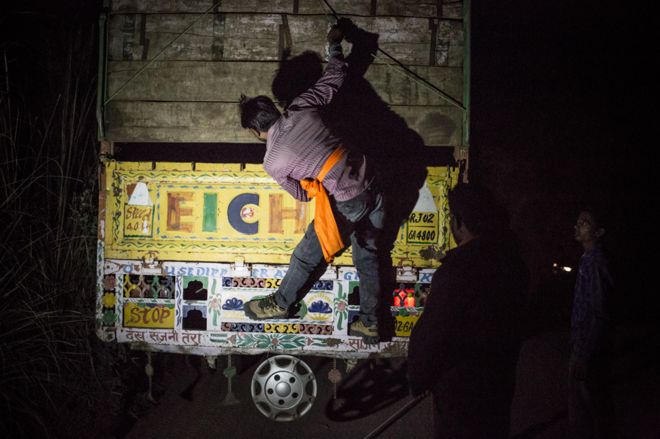
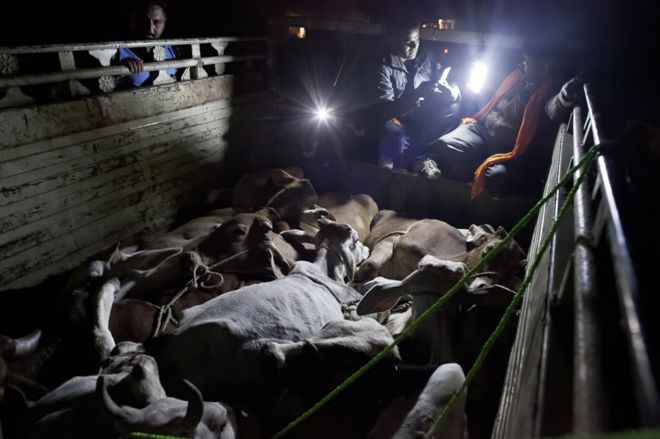
Niwal Kishore Sharma inspects a lorry transporting cows (October 2015)
นิวัล คิชอร์ ชาร์มา ตรวจสอบรถบรรทุกขนวัว (ในปีค.ศ.2015)
Much police activity in Rajasthan is focused on stopping cow slaughter.
กิจกรรมของตำรวจส่วนใหญ่ในรัฐราชสถานก็จะมุ่งเน้นไปที่การหยุดฆ่าวัว
Across the state there are dozens of formal cow checkpoints, where police stop vehicles looking for smugglers who are taking cows to be killed.
ระหว่างรัฐกับรัฐในอินเดีย มีด่านตรวจสอบมากมายหลายจุด ซึ่งรถบรรทุกต่างๆจะต้องหยุดให้ตำรวจตรวจว่า ลักลอกขนวัวเพื่อนำวัวไปฆ่าหรือไม่
I visited one of the checkpoints. Sure enough police were patiently stopping vehicles and looking for cows.
ผมเคยเจอด่านตรวจอยู่จุดหนึ่ง ซึ่งแน่นอนว่าตำรวจจะสั่งให้หยุดรถและสอดส่องหาวัวภายในยานพาหนะอย่างใจเย็น
The night before officers had had a gun battle with a group of men after a truck failed to stop.
คืนก่อนเจ้าหน้าที่ตำรวจมีการต่อสู้กับกลุ่มคนด้วยอาวุธปืนหลังจากที่พวกเขาไม่ยอมหยุดรถ
These checkpoints have become common in some parts of India. Sometimes they are run by the police, sometimes by the vigilantes, and sometimes by both.
ตามด่านจุดตรวจต่างๆที่มีการทำแบบนี้ถือว่าเป็นเรื่องปกติในบางส่วนของอินเดีย บางครั้งดำเนินการโดยตำรวจ บางครั้งดำเนินการโดยกลุ่มพิทักษ์วัว บางครั้งทั้งสองก็ร่วมมือกัน
This gets to the heart of Rakbar's case.
นี่คือหัวใจหลักของคดีของรัคบาร์
Human rights group argue that his murder - and others like his - show that in some areas the police have got too close to the gangs.
กลุ่มพิทักษ์สิทธิมนุษยชนให้เหตุผลว่าการฆาตรกรรมของเขา และคนอื่นๆเช่นเขา แสดงให้เห็นว่า บางพื้นที่นั้นตำรวจเข้าใกล้กับกลุ่มแก๊งมากเกินไป
The vigilantes find what the are looking for (November 2015)
กลุ่มพิทักษ์วัวค้นเจอผู้ลักลอกขนวัว (พฤศจิกายน ค.ศ.2015)
"Unfortunately what we're finding too often is that the police are complicit" Says Meenakshi Ganguly of Human Rights Watch
"ช่างโชคร้ายที่ เมื่อสืบค้นจะพบว่า บ่อยครั้งที่ตำรวจมีการสมรู้ร่วมคิด" มีนัคชิ กังกูลี จากองค์กรพิทักษ์สิทธิมนุษยชนกล่าว
In some areas, police have been reluctant to arrest the perpetrators of violence - and much faster to prosecute people accused of either consuming or trading in beef, he says.
ในบางพื้นที่ เจ้าหน้าที่ตำรวจกลับไม่เต็มใจที่จะจับผู้กระทำความผิดเกี่ยวกับความรุนแรง แต่กลับรีบเร่งที่จะฟ้องคดีและตั้งข้อกล่าวหากับคนที่ค้าขายเนื้อวัว หรือบริโภคเนื้อวัว, นักสิทธิมนุษยชนกล่าว
Human Rights Watch has looked into 12 cases where it claims police have been complicit in the death of a suspected cow smuggler or have covered it up. Rakbar's is one of them.
องค์กรพิทักษ์สิทธิมนุษยชนได้ค้นหาข้อมูลเกี่ยวกับ 12 คดี ซึ่งถูกอ้างว่าตำรวจมีการสมรู้ร่วมคิดในการตาย ของผู้ลักลอบขนวัว หรือไม่ก็ปกปิดคดีเอาไว้ ซึ่งรัคบาร์ก็เป็นหนึ่งในนั้นด้วยเช่นกัน
But this case doesn't just illustrate police failings. Some would argue that it also illustrates how parts of the governing BJP party have inflamed the problem.
แต่คดีนี้ไม่เพียงแต่แสดงให้เห็นถึงความล้มเหลวของเจ้าหน้าที่ตำรวจ แต่แสดงให้เห็นว่ารัฐบาลพรรคภารตีชนตามีความล้มเหลวในการแก้ปัญหาดังกล่าว
Gyandev Ahuja is a larger-than-life character. As the local member of parliament in Ramgarh at the time when Rakbar was killed he's an important local figure.
ไจอันเดฟ อหุญา เป็นบุคคลที่น่าจับตามองมาก ในฐานะสมาชิกสภาท้องถิ่นแรมการฮ์ ในช่วงที่รัคบาร์ถูกฆ่าตาย เขาเป็นบุคคลสำคัญในท้องถิ่นนี้
He has also made a series of controversial statements about "cow smugglers".
เขายังได้จัดทำข้อโต้แย้งเกี่ยวกับ "ผู้ลักลอบขนวัว" อีกด้วย
After a man was badly beaten in December 2017 Ahuja told local media "To be straightforward, I will say that if anyone is indulging in cow smuggling, then this is how you will die."
หลังจากมีคดีชายคนหนึ่งถูกทุบตีอย่างทารุณในเดือนธันวาคม ค.ศ.2017 อหุญา ได้บอกกับสื่อท้องถิ่งว่า "อีนี่ฉันพูดกันตรงๆเลยนะนายจ๋า ถ้าหากใครที่มีส่วนร่วมในการลักลอบขนวัว ก็จะตายแบบนี้จ้านายจ๋า"
After Rakbar's death he said that cow smuggling was worse than terrorism.
หลังจากการตายของรัคบาร์ เขา(ไจอันเด อหุญา)พูดว่า การลักลอบขนวัวนั่นแย่ยิ่งกว่าการก่อการร้ายอีก
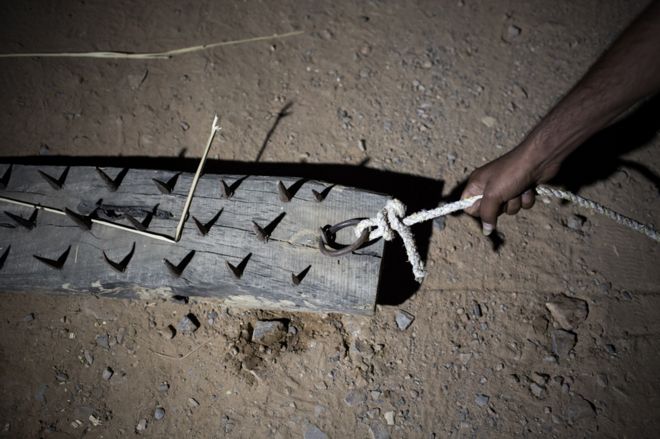
Nails used by the vigilantes to force lorries to stop
ตะปูตอกแผ่นไม้ของกลุ่มพิทักษ์วัว ใช้เพื่อบังคับให้รถบรรทุกหยุด
Gyandev Ahuja is just one of several BJP politicians who have made statements that are supportive of the accused in so-called "cow lynchings" .
ไจอันเดฟ อหุญา คือหนึ่งในสมาชิกของพรรคภารตียชนตา ที่มีการสนับสนุนให้มีการช่วยเหลือผู้ที่ถูกฟ้องในคดีที่ทำร้ายผู้คนวัว หรือที่เรียกว่า "ศาลเตี้ยวัว"
One of Prime Minister Narendra Modi's ministers was even photographed garlanding the accused murderers in a cow vigilante case. He has since apologised.
นเรนทรา โมดี นายกรัฐมนตรีได้ถูกถ่ายภาพขณะกำลังคล้องพวงมาลัยให้ฆาตรกรของกลุ่มผู้พิทักษ์วัว ซึ่งเขาได้ขอโทษไปแล้ว
Meenakshi Ganguly of Human Rights Watch says it is "terrifying" that elected officials have defended attackers.
มีนาคชิ กังกูลี จากองค์กรพิทักษ์สิทธิมนุษยชนกล่าวว่า "มันน่ากลัวนะ" ที่คนที่ได้รับเลือกตั้งอย่างเป็นทางการกลับมาปกป้องกลุ่มพิทักษ์วัวที่สร้างความรุนแรง
"It is really, at this point of time, something that is a great concern, because it is changing a belief into a political narrative and a violent one, " he says.
"ณ จุดจุดนี้ เป็นเรื่องที่น่ากังวลเป็นอย่างมากเนื่องจาก มีการนำความเชื่อทางศาสนาไปสู่ประเด็นการเมืองและความรุนแรง" นักพิทักษ์สิทธิมนุษยชนกล่าว
The worry is that supportive messages from some of the governing party's politicians have emboldened the vigilantes.
ความกังวลก็คือว่า คำพูดที่สนับสนุนจากรัฐบาลและพรรคการเมืองนั้น ได้ให้กำลังใจแก่พวกกลุ่มพิทักษ์วัว
No official figures are kept on cow violence, but the data collected by IndiaSpend suggests that it started ramping up in 2015, the year after Narendra Modi was elected.
ไม่มีการเก็บตัวเลขอย่างเป็นทางการเกี่ยวกับความรุนแรงของวัว แต่ข้อมูลที่เก็บรวบรวมโดย IndiaSpend ชี้ให้เห็นว่ามันเริ่มพุ่งสูงขึ้นในปี ค.ศ. 2015 ซึ่งเป็นปีที่ นเรนทรา โมดี ได้รับการเลือกตั้ง
IndiaSpend says that since then there have been 250 injuries and 46 deaths related to cow violence. This is likely to be an underestimate because farmers who have been beaten may be afraid to go to the police - and when a body is found it may not be clear what spurred the attack. The vast majority of the victims are Muslims.
ข้อมูลจาก IndiaSpend ระบุว่า ตั้งแต่ช่วงเวลานั้นจนถึงตอนนี้ มีผู้บาดเจ็บไปแล้ว 250 ราย มีคนตาย 46 ศพ ซึ่งเกี่ยวโยงกับความรุนแรงที่เกี่ยวกับวัวทั้งนั้น แต่ตัวเลขนี้ก็ดูเหมือนว่าจะน้อยกว่าความเป็นจริง เนื่องจากเกษตรกรที่ถูกทุบตี หรือถูกทำร้ายอาจจะกลัวที่จะไปแจ้งความที่สถานีตำรวจ และเมื่อศพถูกพบก็อาจจะไม่ได้มีการค้นหาผู้กระทำสักเท่าไหร่ ซึ่งเหยื่อส่วนใหญ่ที่ถูกกระทำเป็นมุสลิม
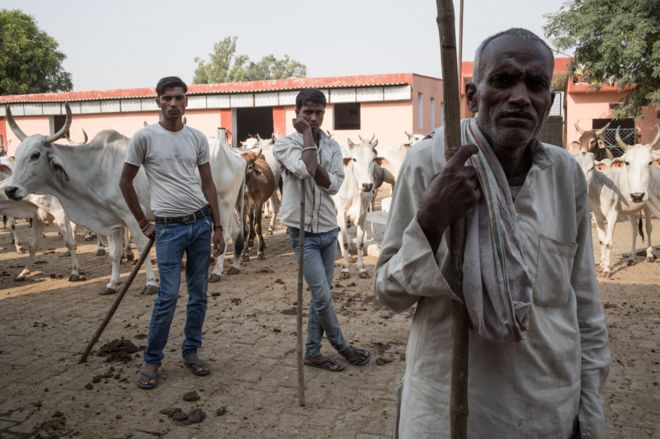
A cow shelter in Ramgarh
ศูนย์พักพิงวัวที่แรมการฮ์
A BJP spokesman, Nalin Kohli, emphatically rejects any connection between his party and cow violence.
โฆษกพรรคภารตียชนตา นาลิน ก่อฮลี ปฏิเสธอย่างแข็งขันว่า ทางพรรคไม่มีส่วนเกี่ยวข้องต่อความรุนแรงที่เกี่ยวกับวัวทั้งสิ้น
"To say the BJP is responsible is perverse, inaccurate and absolutely false," he tells me.
"การพูดว่าพรรคภารตียชนตาจะต้องรับผิดชอบนั้นไม่ใช่ ไม่ถูกต้องและเป็นเท็จอย่างแน่นอน" เขา (โฆษกพรรคภารตีชนตา) บอกผม
"Many people have an interest in building a statement that the BJP is behind it. We won't tolerate it."
"หลายคนให้ความสนใจของคำกล่าวร้ายต่อพรรคภารตียชนตา ว่าอยู่เบื้องหลังเหตุการณ์นี้ และเราจะไม่ทนต่อสิ่งนี้"